
Timelines
Timing depends heavily on the location and security conditions. Agent service in a major city can take a few weeks; Letters Rogatory typically take a year or more, if executed.
Middle East & Africa · Non-Hague Jurisdiction
We coordinate service of process, court filings, and related legal document delivery in Iraq through diplomatic channels and the foreign ministry, as part of our Middle East & Africa coverage network.
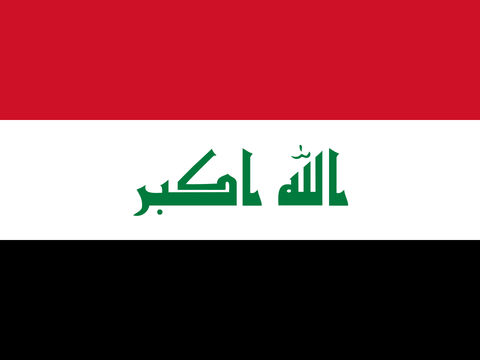
Iraq is not a party to the Hague Service Convention and has no service treaty with the United States. Formal service is by Letters Rogatory through diplomatic channels, which is slow and uncertain. Depending on the defendant's location, service may instead be arranged through a local agent or lawyer, or by a method the court orders under FRCP Rule 4(f)(3).
Security conditions vary significantly across Iraq and affect what is possible. The Kurdistan Region in the north has its own regional government and courts, and practice there can differ from the rest of the country. We assess feasibility for each address before accepting an assignment.
We help prepare the formal request package for the court and manage the diplomatic routing this process requires, including coordination with the U.S. State Department where applicable to Iraq.
Discuss this approach →Where diplomatic channels would be impractical, we help build the factual record needed to support a motion for court-ordered alternative service in matters involving Iraq.
Discuss this approach →The U.S. government advises against travel to Iraq, and conditions differ sharply between regions. Before any work begins, we confirm the address can be reached safely, and counsel should check any sanctions implications for the defendant.
Requirements and current conditions can change — always confirm Iraq's treaty status on the HCCH status table and check current guidance from the U.S. Department of State's judicial assistance page before committing time and court fees to a particular route.
If you expect to enforce a judgment inside Iraq, ask counsel familiar with local law whether the method of service you choose will be respected there — service that satisfies a U.S. court doesn't automatically satisfy a foreign one.
We'll tell you plainly which route looks realistic for your matter, rather than promising an outcome.
The process
We review your case, deadline, and defendant details to confirm whether Letters Rogatory or a Rule 4(f)(3) motion fits better.
The original documents, a request letter, a cover letter, and translations into Iraq's official language(s), typically with a notarized translator's affidavit.
Letters Rogatory must be signed by a judge, not a clerk, and carry whatever seal or authentication Iraq requires.
The request is routed through the U.S. Department of State to Iraq's foreign ministry and courts.
Authorities in Iraq carry out service, and confirmation returns through the same channel for you to file with the court.
Requirements can differ by court and by country, and can change over time — treat this as a general outline, not a checklist for your filing.
Planning your matter
Timing depends heavily on the location and security conditions. Agent service in a major city can take a few weeks; Letters Rogatory typically take a year or more, if executed.
Translate documents into Arabic. For defendants in the Kurdistan Region, a Kurdish translation may also be appropriate.
For a defendant in Iraq, the options are service through a local agent or lawyer where security allows, a court-ordered alternative method under FRCP Rule 4(f)(3), or Letters Rogatory, which are formal but slow. We discuss feasibility for the specific location before starting.
Process Server Global has handled international service of process since 1982, and Iraq is one of the 195 nations we serve. We manage the paperwork, translations, routing, and proof of service, so your documents reach Iraq through the right channel and come back court-ready.
Request service in IraqGetting papers served in Iraq usually depends on the right people in the right offices. We work through the diplomatic and judicial channels Iraq recognizes, and coordinate in-country resources where local law allows, so your request doesn't stall on a technicality. If you're considering hiring a single process server directly in Iraq, be careful — agents may not be authorized under a foreign country's law to serve documents there, and service that ignores local rules can be challenged or carry serious consequences. Talk to us first, and we'll confirm what's permitted and which route will hold up.
We serve summons, complaints, subpoenas, and other court documents in Iraq in line with FRCP Rule 4(f), and return proof of service your court can rely on — a diplomatic confirmation or a sworn affidavit of service, depending on the route used.
Iraq has not joined the Hague Service Convention, so requests don't go through a Central Authority. Treaty status can change, so confirm it on the HCCH status table before you file.
Whatever the document, our team has the experience to execute your specific request and route it through the right channel the first time.
Decades of experience working through the correct government and judicial channels — Hague Central Authorities where they apply, diplomatic and court channels where they don't — mean your documents move through the right process, wherever they're headed.
Since 1982, we've built a track record litigators rely on — documented, court-ready service performed to FRCP 4(f) standards.
Need documents served in Iraq?
Tell us about your case and deadline, and we'll confirm the right service pathway for Iraq.
Request Service in IraqNo. Iraq is not a party to the Hague Service Convention or to any service treaty with the United States.
Depending on location and security, through a local agent or lawyer, by a court-ordered method under FRCP Rule 4(f)(3), or by Letters Rogatory, which are slow.
It can be. The Kurdistan Region has its own government and courts, and practice there may differ from the rest of Iraq.
Yes, and Kurdish may also be appropriate for defendants in the Kurdistan Region.
It depends heavily on location and security. We assess each address before giving an estimate.
It depends on the route (Letters Rogatory versus a Rule 4(f)(3) motion), the number of defendants, document volume, translation needs, and government or consular fees. Tell us about your case and deadline and we'll outline the fees before you commit to anything.
Last updated: September 24, 2026
This page provides general information based on treaty membership status and is not legal advice. Requirements can vary by case and change over time — contact us to confirm current procedures for Iraq.